Every pharma air freight shipment passes through a series of hands. A warehouse team prepares it. A ground handler team transfers it. An airline flies it. Customs clears it. A carrier team delivers it. Along the way, the product inside the container experiences multiple modes of transport and transfers with potential delays, where one party’s accountability ends and another’s begins.
At every one of those moments, two things determine whether the product arrives intact: the quality of the handling environment around the container, and the quality of the protection the container provides on its own.
The second is where the container specification decision becomes critical.
What is a ULD container and how does it move through the air freight system?
A Unit Load Device (ULD) is a container or cargo combined with a ULD pallet & net that integrates directly with the standardized cargo loading system used in wide-bodied aircraft operations. Airlines and ground support providers have built their entire ground handling ecosystem around the ULD format using standardized Ground Support Equipment (GSE). The use of specialized equipment and integrated tracking systems ensures precise handling, maximizing operational efficiency and safety to maintain a clear, accountable chain of custody for ULDs from origin to destination and any repositioning.
When a ULD container enters the network, it carries its own unique ID Code. That ID Code is used by the airline’s system to track, allocate, and highlight the container at every touchpoint through the network based on the individual ULD ID Code (i.e. RKN 01234 7K). Active ULD containers are also assigned the Special Handling Code ACT for Active Temperature Controlled Containers. The unique ID Code and Special Handling Code are tracked on every leg of the shipment including any repositioning.
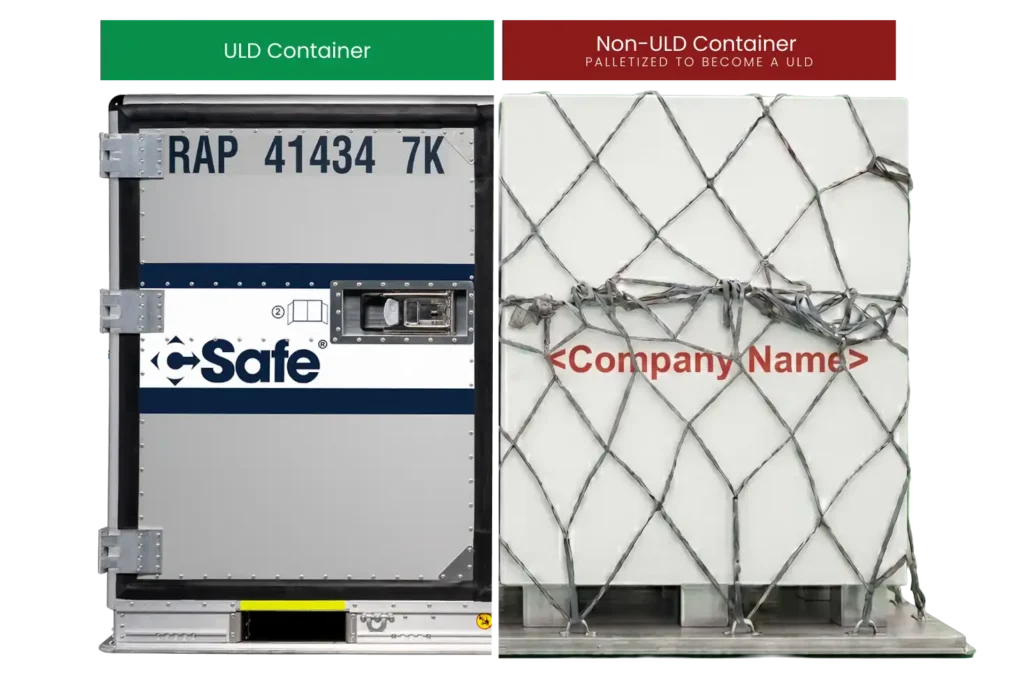
ULD ADVANTAGE
Highlighting the special function of the ULD container and its ID Code gives the airline clear visibility and accountability for ULD containers at every touchpoint.
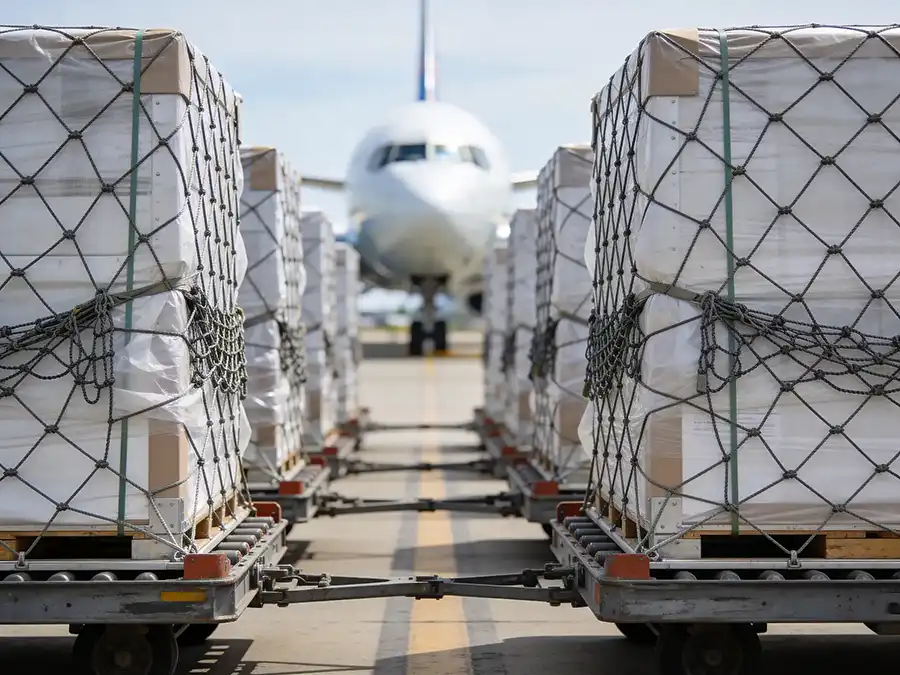
Unlike the ULD container, when moving a non-ULD container instead, the operational picture is more complicated requiring additional steps, resources, and time. A non-ULD container is classified as “Cargo” and must be palletized. The non-ULD container is stacked onto a separate ULD pallet, secured with a certified cargo net and straps, and processed as part of that palletized load. The airline system only tracks the ULD pallet and not the individual pieces of cargo that make up the load. That traceability gap is not a minor administrative issue. The non-ULD container lacks direct visibility within the airline system on every leg, including any repositioning.


How is a ULD container secured during flight?
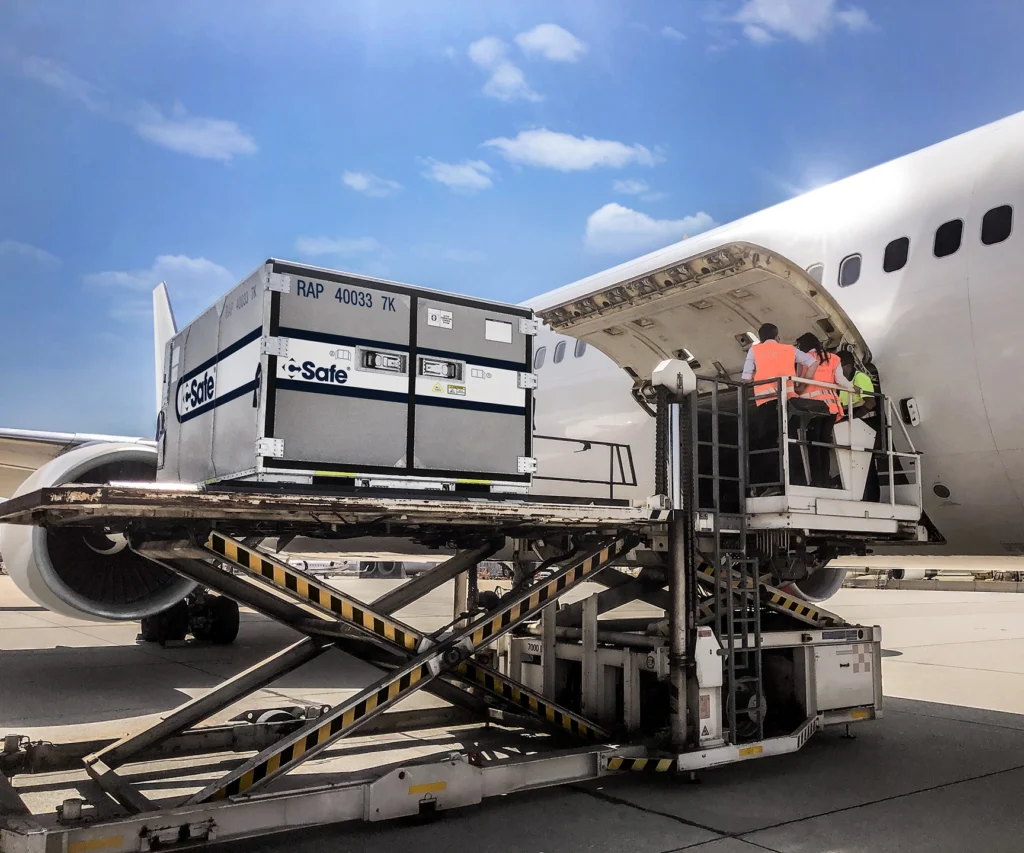
Because the base of a ULD container is designed to lock directly into the aircraft cargo loading system, this mechanical integration is not simply a convenience. Rather, it is an operational advantage providing a secure and direct restraint of the ULD container within the aircraft.
Non-ULD containers are restrained by net and straps to the ULD pallet and therefore carry different risks. There is a higher potential for the non-ULD container to shift during flight and greater exposure to impact damage from co-loaded cargo on the ULD pallet.
Design advantage
Locking into the aircraft’s Cargo Loading System by design, a ULD container is directly restrained by the aircraft structure. A non-ULD container is restrained by a textile net and straps as part of a palletized ULD load.
How does an active ULD container maintain protection through unplanned delays?
ULD classification addresses how a container integrates with the air freight system. Active temperature control addresses what the container does when the environment around it becomes unpredictable and volatile.
A ULD container with Active Temperature Control is designed to maintain its setpoint temperature through the environmental and operational variables that no lane risk analysis can fully anticipate. A customs hold at a transit hub. An unplanned overnight delay. An extended dwell during an unscheduled disruption. An active ULD container is designed to operate through significant disruptions, without relying on cold-room access – a process that introduces its own variables, including potential co-location with non-pharma cargo such as perishables.
Active advantage
Active ULD containers are designed to operate through significant disruptions — without relying on cold-room access and with minimal dependency on ancillary processes to sustain performance when the unexpected occurs.
This matters because global transportation, even on well-managed shipment lanes, is subject to disruptions that nobody planned for. Geopolitical events, weather, congestion, and operational constraints can unexpectedly extend any segment of the journey. When that happens, the contingency planning and the handling environment around the container is only part of the story. What the container itself is capable of becomes the deciding factor.
When conditions deviate from the plan, what the container itself is capable of becomes the deciding factor.
What determines the right container specification for a pharma air freight shipment?
Lane selection, carrier relationships, and facility certifications are well understood and widely managed across pharma air freight. The container specification — what travels inside all of that infrastructure, through every handoff, across every segment — is where those decisions ultimately come together.
The right container for a given shipment is determined by the critical requirements of the cargo product, the demands of the lane, and the level of control required when conditions deviate from the plan. That analysis leads different shippers to different conclusions based on criticality. The best processes for determining a container specification are based on specific lane risk analysis and contingency planning that identify the best solution, rather than defaulting to convention or lowest cost.
For high-value biologics, long-haul lanes with multiple transshipments, and lanes with historical excursion data, the risk profile demands the highest performing specification available. Active ULD containers meet that standard by working with the air freight system at every level, from how the container is tracked and highlighted across the network to how it performs when the journey does not go as planned.
Specification note
The right container is determined by the product requirements, the lane, and the level of control required. For shipments where the risk profile demands it, active ULD containers work with the air freight operations at every level.
Shared knowledge. Better outcomes.
CSafe brings real-world experience to every customer conversation. Speak with a CSafe specialist about your lanes, product profile, and container requirements.