In pharma air freight, whether your container is a ULD or not determines far more than how it sits on the aircraft. It determines traceability, compliance, process steps, and chain of custody through the journey.
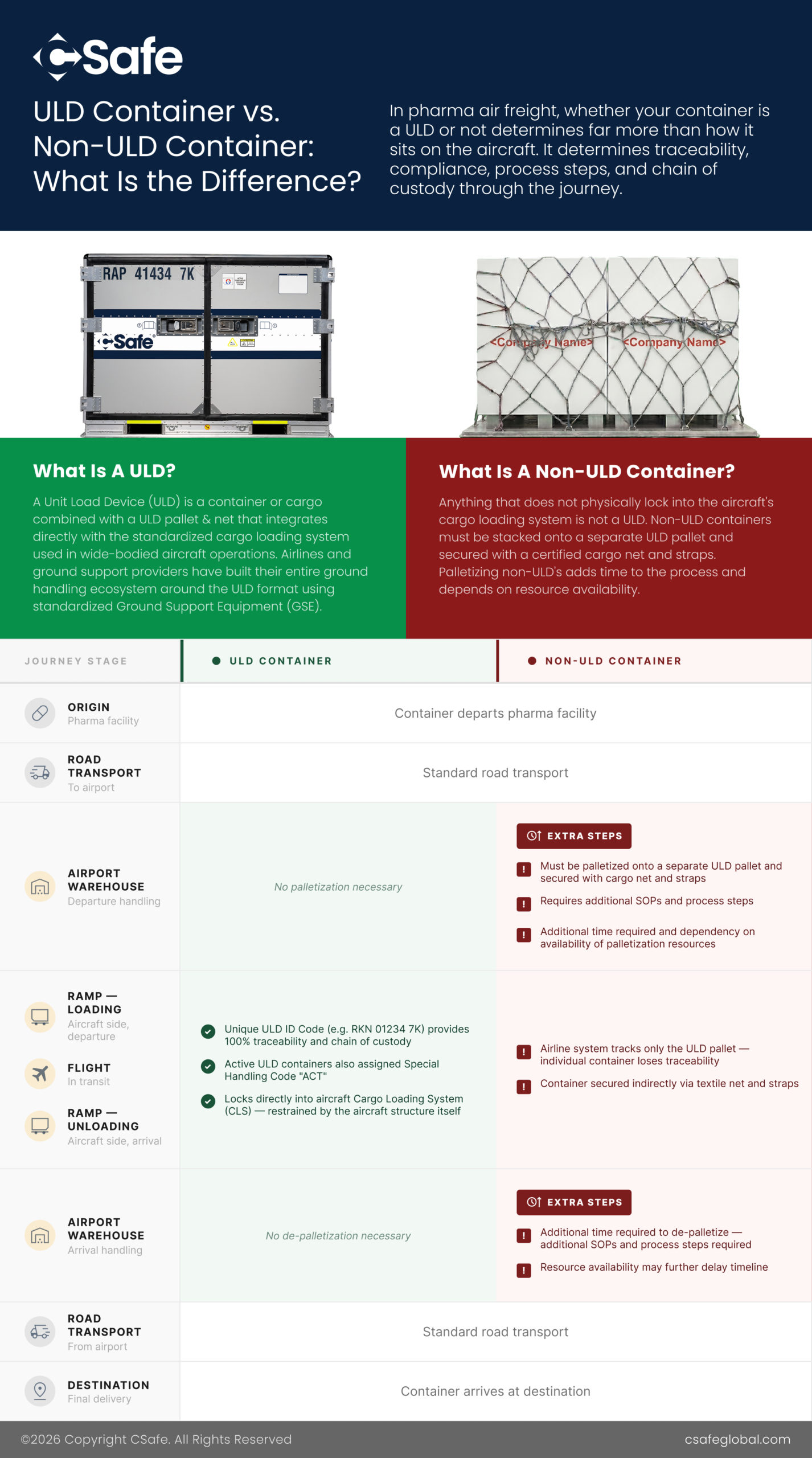
Every pharma air freight shipment passes through a series of transport stages. Whether or not a container is a ULD dictates what happens to the shipment throughout the journey. To better understand the differences, the sections below walk through a visual journey infographic, definitions of ULD and non-ULD containers, and a key takeaway side-by-side comparison of ULD and non-ULD containers.
Definitions
What is a ULD?
A Unit Load Device (ULD) is a container or cargo combined with a ULD pallet & net that integrates directly with the standardized cargo loading system used in wide-bodied aircraft operations. Airlines and ground support providers have built their entire ground handling ecosystem around the ULD format using standardized Ground Support Equipment (GSE).
What is a Non-ULD Container?
Anything that does not physically lock into the aircraft’s cargo loading system is not a ULD. Non-ULD containers must be stacked onto a separate ULD pallet and secured with a certified cargo net and straps. Palletizing non-ULD’s adds time to the process and depends on resource availability.
Key Takeaway: ULD vs Non-ULD Container Comparison
| ULD Container | Non-ULD Container |
| No palletization required | Must be palletized and strapped onto a separate ULD pallet – requires additional time and dependency on available resources |
| Airline system tracks unique ULD ID code | Airline system tracks only the ULD pallet – individual container loses traceability |
| Locks directly into the aircraft cargo loading system & restrained by aircraft structure itself | Container secured indirectly with textile net and straps |
| No de-palletization required | Must be de-palletized – requires additional time and dependency on available resources |
Shared knowledge. Better outcomes.
CSafe brings real-world experience to every customer conversation. Speak with a CSafe specialist about your lanes, product profile, and container requirements.